
How is Loan Interest Calculated? The Math Behind Amortization
See how a fixed-payment loan divides each payment between interest and principal, with a transparent three-payment worked example and extra-payment checks.

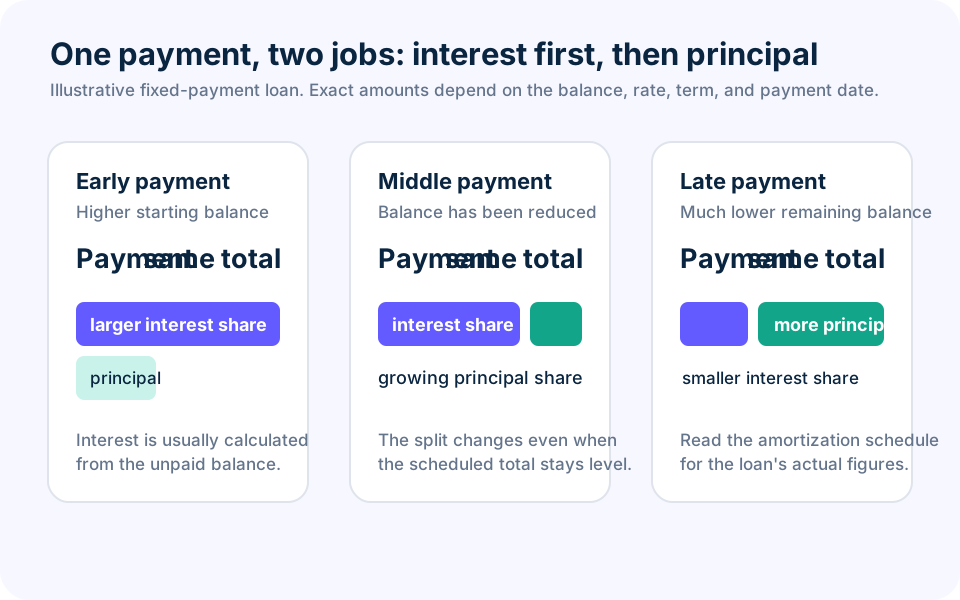
A loan payment is not the same thing as the amount by which your balance falls. In a typical fixed-rate amortizing loan, the lender first calculates the interest due for the period. The rest of that scheduled payment reduces the amount borrowed, called principal. Because the balance changes after every payment, the split changes too.
The result is an amortization schedule: a receipt-like record of each payment, its interest portion, its principal portion, and the remaining balance. This guide shows the standard fixed-payment model used by the Amortization Calculator, then explains where a real loan can differ from the model.
Model first, contract second. The equations below assume a fixed interest rate, equal monthly payments, and a monthly rate calculated as annual rate ÷ 12. Your note, disclosure, or servicer statement controls if it uses daily interest, variable rates, fees, escrow, a different first-payment period, or a special payment rule.
The standard fixed-payment formula
For a fully amortizing loan with equal monthly payments, the scheduled principal-and-interest payment can be written as:
- M is the scheduled monthly principal-and-interest payment.
- P is the starting principal balance.
- r is the monthly interest rate expressed as a decimal.
- n is the total number of scheduled monthly payments.
For example, a 6% annual rate becomes 0.06 ÷ 12 = 0.005 per month in this simplified monthly model. A 30-year term has 30 × 12 = 360 scheduled payments.
How one payment is divided
Once the scheduled payment is known, the monthly allocation uses two smaller calculations:
The ending balance is the opening balance minus principal paid. That ending balance becomes the next month’s opening balance. This is why the interest portion falls gradually even though the scheduled payment stays the same.
Worked example: three payments on a $200,000 loan
Assume a $200,000 balance, a 6% annual fixed rate, a 30-year term, and the simplified monthly-rate model above. The calculated scheduled principal-and-interest payment is about $1,199.10. The table rounds to cents, so a final payment in a real schedule may differ slightly.
| Payment | Opening balance | Interest at 0.5% | Principal | Ending balance |
|---|---|---|---|---|
| 1 | $200,000.00 | $1,000.00 | $199.10 | $199,800.90 |
| 2 | $199,800.90 | $999.00 | $200.10 | $199,600.80 |
| 3 | $199,600.80 | $998.00 | $201.10 | $199,399.70 |
The first payment reduces the balance by $199.10, not by $1,199.10, because $1,000.00 covers the period’s interest. By payment three, the interest charge is slightly lower because the starting balance is lower. Over a full schedule, this process continues until the balance reaches zero.
Turn a schedule into a payment-record check
An amortization table is most useful when you can compare it with a real statement. Make a short record for each payment period with the opening principal balance, the payment date, the scheduled principal-and-interest amount, the interest charged, the amount applied to principal, any escrow or fees, and the ending principal balance. Keep principal separate from the total payoff amount; a payoff quote can include per-diem interest, fees, or other amounts that are not part of the scheduled principal balance.
For a simple fixed monthly model, the reconciliation is:
If the numbers do not match, do not force the statement to fit the calculator. Check for a payment posted on a different date, an extra or partial payment, a late fee, an interest adjustment, a change in rate, a capitalization event, or a loan that calculates interest daily. A daily-interest loan can charge a different amount in a 28-, 30-, or 31-day period even when the stated annual rate is unchanged.
For a mortgage, also separate escrow deposits for taxes and insurance from principal and interest. For an auto or personal loan, look for fees or optional products that may be shown beside the payment. This record does not replace a servicer's statement; it gives you a clear question to ask if the principal balance or payment allocation is unexpected.
Why the interest rate and APR are not interchangeable
The interest rate is used to calculate interest on the balance. APR is a broader disclosure measure that may reflect certain finance charges and can help compare offers with similar terms. A monthly payment calculator should use the loan’s stated interest rate and term; a comparison of mortgage offers should also review the Loan Estimate, cash to close, points, fees, mortgage insurance, and payment changes where applicable.
Escrow for property taxes and insurance may appear in a mortgage payment, but it is not principal or interest. A schedule that includes only principal and interest should label that clearly rather than presenting it as the total amount that leaves a borrower’s account each month.
How extra payments change the schedule
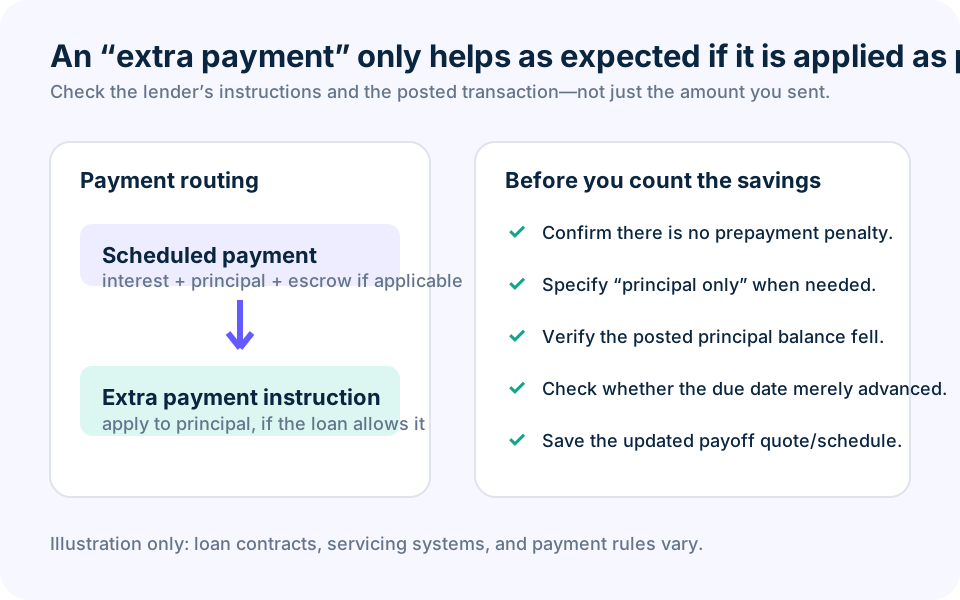
An extra payment can reduce future interest only after it reduces principal. For a loan that allows prepayment, the sequence is simple:
- The servicer receives the scheduled payment under the loan’s normal rules.
- The extra amount is identified as an additional principal payment, if the loan and servicer permit it.
- The principal balance becomes lower than the original schedule assumed.
- Future interest is calculated from that lower balance, subject to the loan’s actual calculation method.
Do not assume an extra amount has been applied exactly as intended. Check the statement or ask the servicer how it will be handled, especially if the account is paid ahead, has a due-date change, includes escrow, or has a prepayment provision.
A practical extra-payment check
Before relying on a projected savings result, record these answers from the contract, statement, or servicer:
- Is prepayment allowed, and is there a fee or restriction?
- Can the payment be designated as principal-only?
- Does the loan use monthly, daily, or another interest calculation method?
- Does the displayed payment include escrow, insurance, fees, or other non-principal-and-interest amounts?
- Will the servicer reduce the next due amount, shorten the term, or follow another rule after an extra payment?
Enter only the principal balance, rate, term, scheduled payment cadence, and confirmed extra-payment assumptions into the Amortization Calculator. For a quick payment estimate before building the schedule, use the Loan Calculator.
Scope and limitations
This is general educational information, not lending, legal, tax, or personalized financial advice. The worked example is a simplified fixed-rate monthly model. Consumer-protection sources cited here are U.S.-specific. Your signed loan documents, applicable law, and servicer disclosures control the actual payment calculation and treatment of extra payments.
Sources and assumptions
These links support the specific material, product, or reference points used in this guide. Local conditions and supplier specifications can still vary.
- Consumer Financial Protection Bureau — What Is Amortization and How Could It Affect My Auto Loan? Explains the amortization schedule and why a larger portion of early fixed payments generally goes to interest.
- Consumer Financial Protection Bureau — Mortgage Servicer Rules Supports the caution to confirm whether an extra payment is permitted and applied to principal. It is U.S. mortgage-servicing guidance.
- Consumer Financial Protection Bureau — Loan Estimate Explainer Supports the distinction between an interest rate, APR, payment, and closing costs on a U.S. mortgage Loan Estimate.