Road Base Calculator
Estimate road base, crushed stone, and aggregate for any project. Calculate cubic yards, tons, truckloads, and cost — with an automatic compaction allowance so you order enough material to reach your finished depth.
Example Projects
Residential Driveway
40' × 12' × 6" • Road Base
Parking Area
60' × 40' × 8" • Crusher Run
Paver Patio Base
20' × 15' × 4" • Crushed Stone
Gravel Road
500' × 12' × 10" • Aggregate Base
Configure Project View Results
Road Base Estimate
View Calculation Breakdown
| Compacted (finished) volume | 0.00 yd³ |
| Extra for compaction | + 0.00 yd³ |
| Cubic Feet (loose) | 0.00 ft³ |
| Cubic Meters (loose) | 0.00 m³ |
How this was calculated:
Everything behind the Road Base Calculator
Formulas, reference charts, and detailed answers — expand any section you need.
Road Base Density Chart
Road base is sold by the ton, so volume must be converted using the material's density. Use these approximate figures (auto-filled in the calculator) or your supplier's exact value.
| Material | Approx Tons / Cubic Yard |
|---|---|
| Road Base | 1.4 – 1.6 |
| Crushed Stone | 1.3 – 1.5 |
| Limestone | 1.3 – 1.5 |
| Aggregate Base | 1.4 – 1.6 |
| Crusher Run | 1.4 – 1.7 |
Compaction Reference Chart
Loose road base loses volume when compacted, so you order extra material to hit the finished depth. Typical allowances:
| Material | Typical Compaction |
|---|---|
| Road Base | 10 – 20% |
| Crushed Stone | 10 – 15% |
| Aggregate Base | 10 – 20% |
| Limestone | 10 – 15% |
Dump Truck Capacity Chart
| Truck Type | Typical Capacity |
|---|---|
| Small Dump Truck | 5 – 10 tons |
| Standard Dump Truck | 10 – 16 tons |
| Large Dump Truck | 16 – 20 tons |
| Semi Dump Trailer | 20 – 25 tons |
Recommended Base Depth Chart
| Application | Recommended Compacted Depth |
|---|---|
| Paver Base | 4 – 6 inches |
| Residential Driveway | 4 – 8 inches |
| Foundation Base | 6 – 12 inches |
| Road Base | 8 – 12 inches |
| Parking Lot | 8 – 18 inches |
How Much Road Base Do I Need?
Determining how much road base you need is one of the most important steps in any construction or landscaping project. Whether you are building a driveway, preparing a foundation, installing a patio, or constructing a road, the correct amount of base material ensures long-term durability and stability.
The amount of road base required depends on several key factors, including the total area of your project, the depth of the base layer, the type of material used, and the expected compaction rate. For example, a residential driveway may require a compacted depth of 4 to 8 inches, while a heavy-duty road or parking lot may require 10 to 18 inches or more.
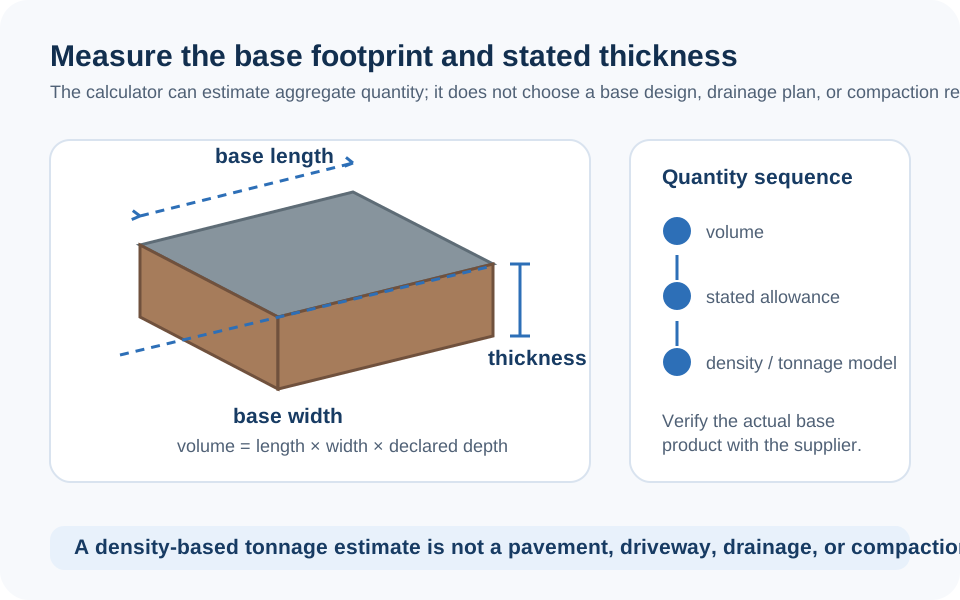
To calculate road base accurately, you must first determine the volume of the area in cubic feet or cubic yards by multiplying the length, width, and depth. Once the volume is calculated, it is converted into tons using the material's density. Most road base materials weigh between 1.4 and 1.6 tons per cubic yard.
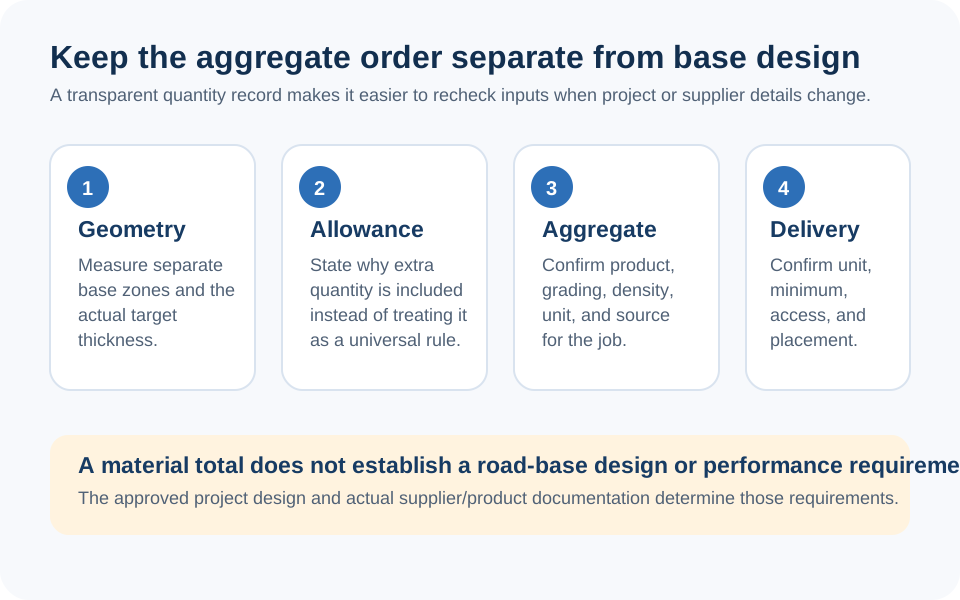
Another important factor is compaction. Road base is typically delivered loose and then compacted during installation, so you need to order additional material to account for compaction loss, which usually ranges from 10% to 25%. This road base calculator handles the entire process automatically, converting measurements, adjusting for compaction, and estimating the total material required so you avoid costly under- or over-ordering.
Road Base Calculator for Driveways
A driveway requires a strong, stable base to support vehicles and prevent cracking, sinking, or erosion over time. The road base layer acts as the foundation beneath asphalt, concrete, or gravel, distributing weight evenly and improving drainage.
For most residential driveways, a compacted road base depth of 4 to 8 inches is recommended. If the driveway will support heavy vehicles such as trucks or RVs, a thicker base of 8 to 12 inches may be necessary.
For example, a 20-foot by 40-foot driveway with a 6-inch finished base needs about 14.8 cubic yards of compacted material. After a 15% compaction allowance, you would order roughly 17.4 cubic yards (about 26 tons) of loose road base. The driveway road base calculator gives you the cubic yards, tons, and truckloads required, plus material and delivery costs, so you can plan your budget confidently.
Gravel Base Calculator for Construction Projects
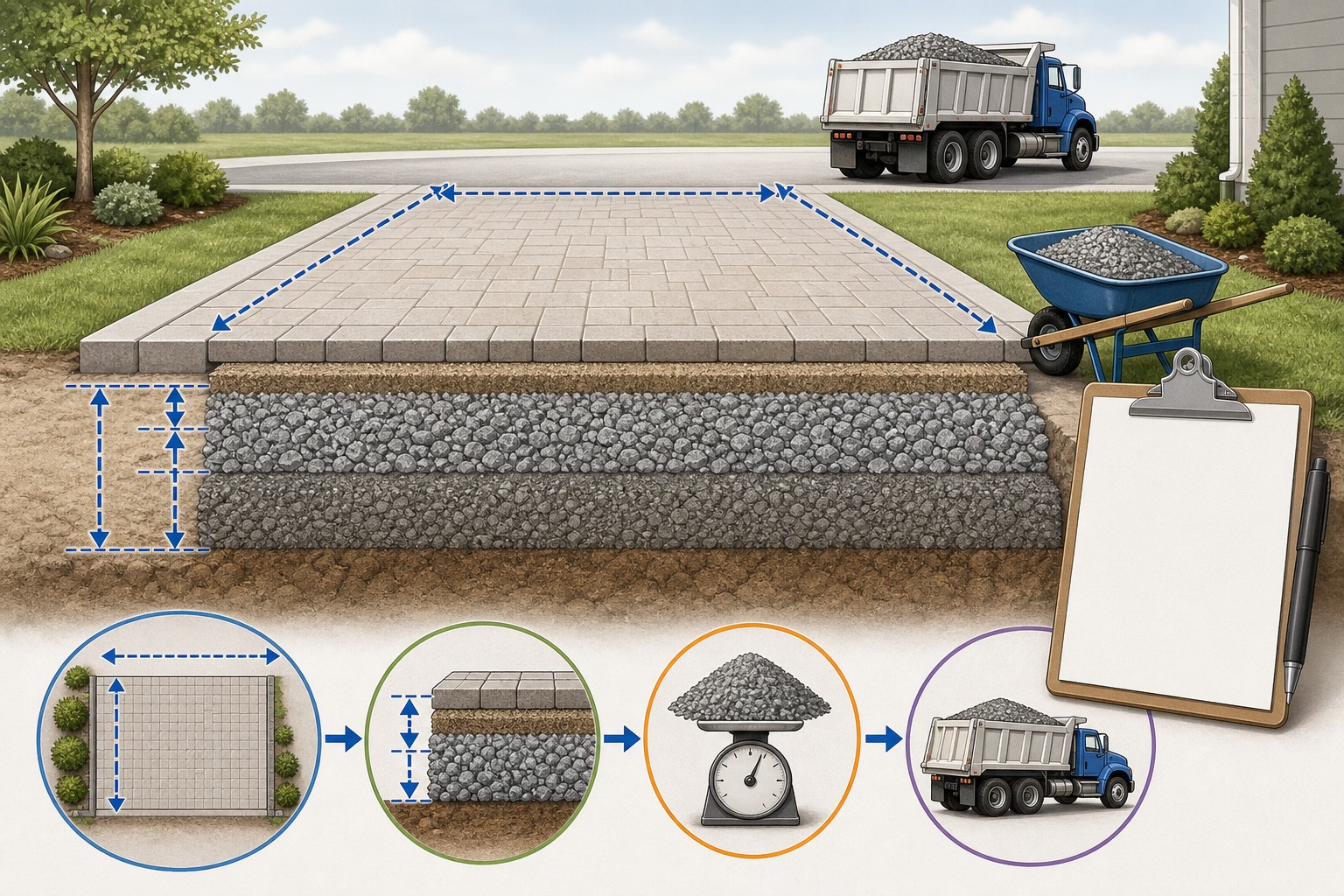
Gravel base is widely used as a foundational layer beneath concrete slabs, pavers, patios, and foundations. It provides structural support, improves drainage, and prevents shifting or settling over time.
When calculating gravel base requirements, consider the type of project and the load it will support. A patio or walkway may require a base depth of 4 to 6 inches, while a concrete slab foundation may require 6 to 12 inches depending on soil conditions and load requirements.
Gravel base materials vary in size and composition, which affects their density and compaction. Common materials include crushed stone, aggregate base, and limestone, each with a slightly different weight per cubic yard. The calculator lets you input project dimensions and automatically calculates the required volume, weight, and compaction allowance so your project is built on a solid foundation.
Crushed Stone Calculator
Crushed stone is one of the most commonly used materials for road base and construction projects. It is made by crushing large rocks into smaller pieces, creating a durable, compactable material ideal for base layers.
Crushed stone comes in various sizes and grades. Smaller sizes are often used for paver bases and walkways, while larger aggregates are used for roads and heavy-duty construction. Most crushed stone weighs between 1.3 and 1.5 tons per cubic yard.
The crushed stone calculator estimates the exact amount of material required — cubic yards, tons, and truckloads — making it easier to plan deliveries and avoid shortages. Ordering the correct amount ensures proper compaction and stability while reducing waste and unnecessary cost.
How Many Tons of Road Base Do I Need?
Road base is purchased and delivered by the ton, so you must convert your project's volume into weight using the material's density.
To calculate tons, first determine the volume in cubic yards, then multiply by the material's density. For example, if your project needs 15 cubic yards of road base and the material weighs 1.5 tons per cubic yard, you will need about 22.5 tons — before adding the compaction allowance.
Different materials have different densities, so accurate values matter. The road base tonnage calculator performs these conversions automatically and accounts for compaction, which increases the total material needed. Accurate tonnage prevents delays and extra costs from ordering too little or too much — especially important on large projects.
Road Base Compaction Explained
Compaction is a critical step in any road base installation. When material is delivered it is loose, with air gaps between particles. During installation it is compacted with heavy equipment, reducing its volume and increasing its density.
This improves strength and stability, letting the base support heavy loads without shifting or settling. But it also means the final compacted volume is less than the original loose volume.
Typical compaction rates range from 10% to 25%. For example, to achieve a compacted depth of 6 inches you may need to install 7 to 8 inches of loose material. This calculator automatically divides your finished volume by the compaction factor, so you order enough material to reach the desired depth and avoid thin base layers that lead to structural failure.
Road Base Cost Calculator
Estimating cost is an important part of project planning. The total depends on material type, quantity, delivery distance, and labor.
Material costs are calculated per ton, with prices varying by location and material. Delivery costs depend on distance and the number of truckloads. Labor may include excavation, grading, and compaction.
The road base cost calculator provides a complete estimate: material cost based on tonnage, plus delivery and labor. Accurate cost estimation helps you plan effectively, avoid surprises, and compare materials to choose the most cost-effective option.
Truck Load Calculator for Road Base
Road base is typically delivered by dump truck, so estimating the number of truckloads helps you schedule deliveries and manage logistics.
Truck capacity varies: small dump trucks carry 5 to 10 tons, while larger trucks and semi trailers carry up to 25 tons. To find the number of loads, divide the total tonnage by the truck's capacity — for example, 50 tons at 10 tons per truck is about 5 loads.
The truck load calculator automates this based on your project and selected truck size, helping ensure timely delivery, reduce transportation costs, and improve overall efficiency.
Common Road Base Project Examples
- Residential Driveway: A 20 ft × 40 ft driveway with a 6-inch finished base needs about 14.8 cubic yards compacted — roughly 17 cubic yards (about 25 tons) of loose road base after a 15% compaction allowance.
- Parking Area: A 40 ft × 60 ft parking area with an 8-inch base needs about 59 cubic yards compacted — roughly 70 cubic yards, or about 105 tons, of crusher run after compaction.
- Gravel Road: A 500 ft × 12 ft road with a 10-inch base needs about 185 cubic yards compacted — well over 200 cubic yards, or roughly 330 tons of aggregate, after compaction.
- Paver Patio: A 15 ft × 20 ft patio with a 4-inch base needs about 3.7 cubic yards compacted — roughly 4 to 5 cubic yards, or 6 to 8 tons, of crushed stone.