Sand Calculator
Estimate sand volume, cubic yards, tons required, coverage area, and material costs for landscaping, pools, sandboxes, and construction projects.
Example Projects
Configure Project View Results
Sand Estimate
View Calculation Breakdown
Detailed Measurements Live
| Pounds Required | 0 lb |
| Cubic Feet | 0.00 ft³ |
| Cubic Meters | 0.00 m³ |
| Approx. Truck Loads (14 Tons) | 0.00 |
| Waste Margin Included | + 0.00 tons |
How this was calculated:
Fill in the dimensions above to output step-by-step formula logs...
Everything behind the Sand Calculator
Formulas, reference charts, and detailed answers — expand any section you need.
Sand Density Chart
| Sand Type | Average Density (lb/ft³) | Tons per Cubic Yard |
|---|---|---|
| Masonry Sand | 100 lb/ft³ | ~1.35 Tons |
| Concrete Sand | 100 lb/ft³ | ~1.35 Tons |
| Play Sand | 95 lb/ft³ | ~1.28 Tons |
| Fill Sand | 95 lb/ft³ | ~1.28 Tons |
| Sharp Sand | 105 lb/ft³ | ~1.42 Tons |
| Polymeric Sand | 100 lb/ft³ | ~1.35 Tons |
Sand Coverage Chart
Approximate coverage per cubic yard of sand:
| Depth | Coverage Area |
|---|---|
| 1 Inch | 324 sq ft |
| 2 Inches | 162 sq ft |
| 3 Inches | 108 sq ft |
| 4 Inches | 81 sq ft |
Coverage may vary depending on compaction and moisture levels.
Introduction
Estimate exactly how much sand you need for your next project with our free Sand Calculator. Whether you're building a patio, installing pavers, creating a sandbox, preparing an above-ground pool base, or leveling a landscape area, accurate sand calculations help prevent waste and save money.
This calculator instantly estimates sand volume, cubic yards, cubic feet, cubic meters, total weight, truckloads, and material costs based on your project dimensions and sand type. Designed for homeowners, landscapers, contractors, and builders, the tool provides fast and accurate results for virtually any sand-related project.
How to Use the Sand Calculator
Using the Sand Calculator is simple and only takes a few steps. Start by entering the length and width of the area where sand will be installed (for rectangular projects) or the diameter (for circular projects). Next, enter the desired depth of the sand layer. Choose the type of sand being used and optionally enter the cost per ton to estimate project expenses.
Once calculated, the tool provides:
- Cubic Feet
- Cubic Yards
- Cubic Meters
- Tons Required
- Estimated Cost
- Delivery Quantities (approx. truckloads)
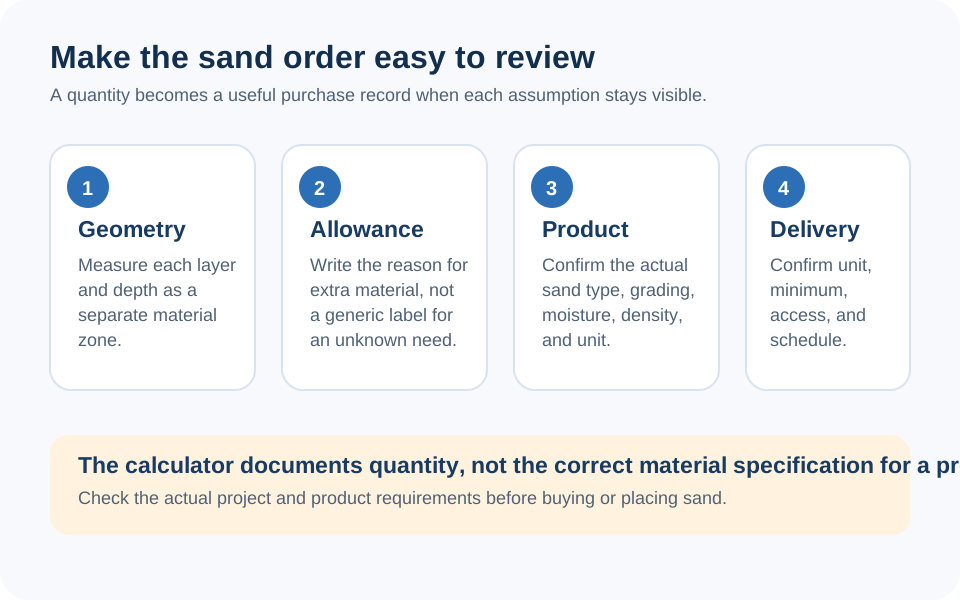
This information helps ensure you order the correct amount of material and avoid unnecessary expenses.
Sand Volume Formula Explained
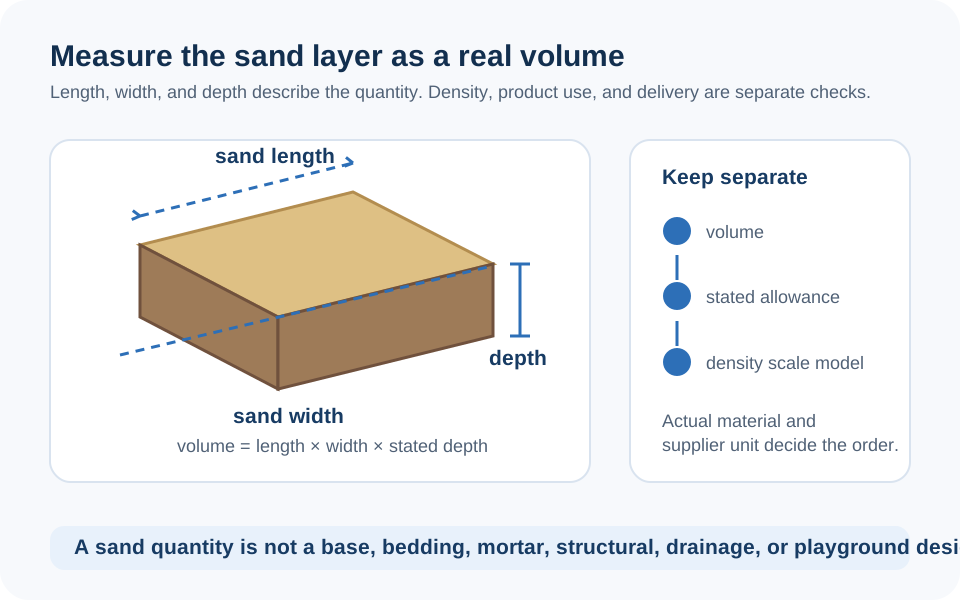
Every sand calculation begins with determining volume. Volume is calculated using standard geometry:
Volume = π × (Diameter ÷ 2)² × Depth
The calculator automatically converts your measurements into the most commonly used construction units. This allows contractors and homeowners to quickly estimate material requirements without performing manual calculations.
Sand Weight Formula
After volume is calculated, the total weight of the sand must be determined. Different sand types have different densities. Examples include Masonry Sand, Concrete Sand, Play Sand, Fill Sand, Sharp Sand, and Polymeric Sand.
The calculator multiplies the volume by the selected sand density to estimate total weight and tonnage requirements. This helps users order materials from suppliers that sell by weight rather than volume.
Sand Calculator for Pavers
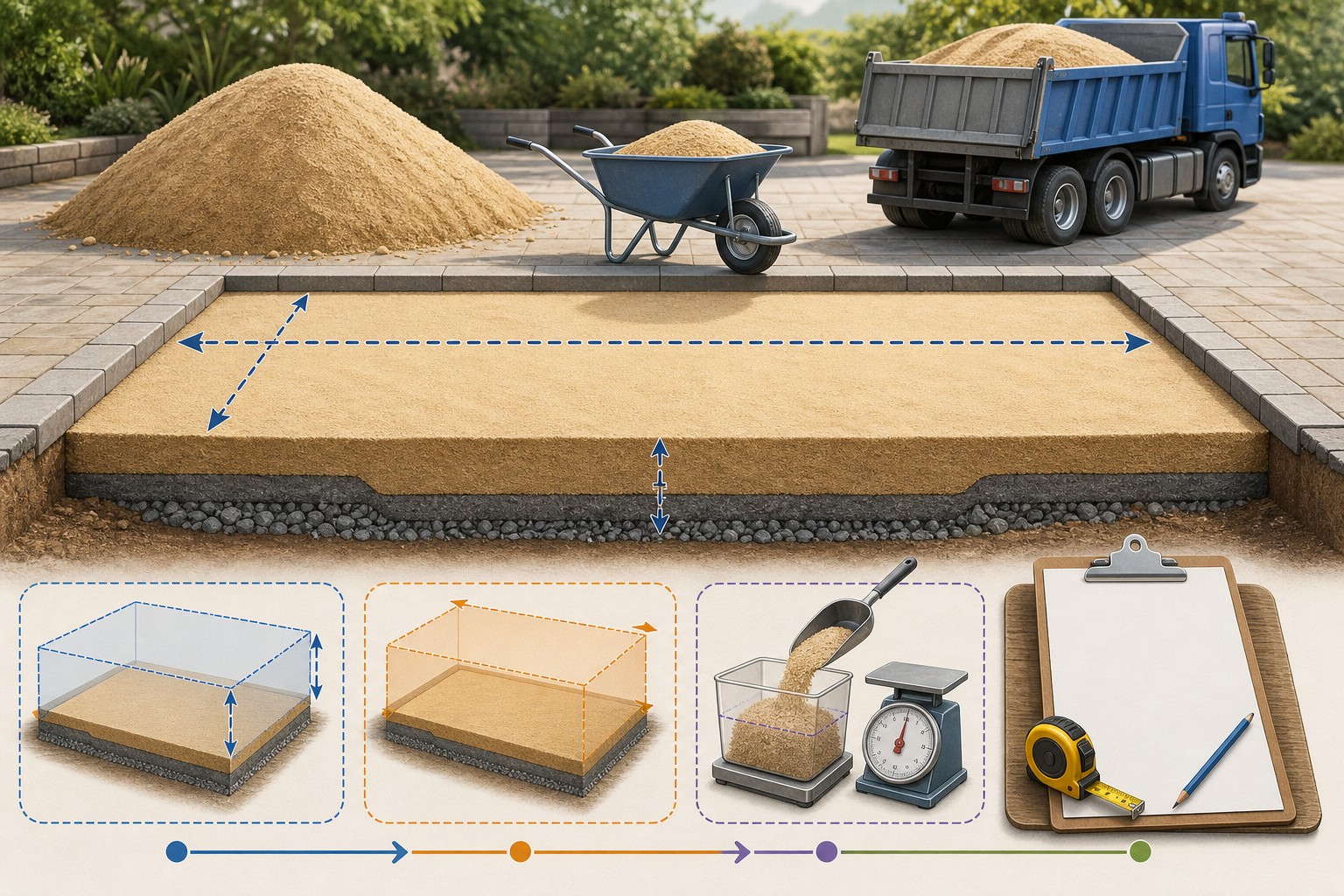
One of the most common uses for sand is beneath paver installations. Paver projects typically require base sand, joint sand, and bedding sand. Most paver installations use 1 to 2 inches of bedding sand beneath the pavers.
Use our paver sand calculator / sand calculator for pavers to estimate exactly how much sand is needed for patios, walkways, driveways, and outdoor living areas. A solid bedding layer provides long-term stability and guarantees your pavers will not shift over time.
Sand Calculator for Sandboxes
Building a sandbox requires more sand than most homeowners expect. The amount needed depends on sandbox dimensions, desired play depth, and type of play sand. Most residential sandboxes use depths between 6 and 12 inches.
Our sandbox sand calculator (or play sand calculator) helps parents estimate the correct amount of play sand while minimizing waste, ensuring your kids have a deep, safe play environment.
Sand Calculator for Above Ground Pools
Many above-ground pools require a sand base to provide a smooth and level surface. Using too little sand can create uneven areas beneath the liner, while using too much sand can increase project costs unnecessarily.
This pool sand calculator / above ground pool sand calculator estimates the exact amount of sand required for round, oval, and rectangular pool installations (typically using 2 to 3 inches of masonry or pool-base sand).
Sand Calculator for Artificial Turf
Artificial turf installations often require a compacted sand layer before installation. A proper sand base improves drainage, stability, surface leveling, and long-term durability. Use our artificial turf sand calculator (or turf base calculator) to determine how much sand is required before turf installation begins.
Types of Sand Explained
Different projects require different types of sand:
Used for brick work, mortar, finishing projects, and above-ground pool bases because of its fine texture.
Used for concrete mixing, paver bases, and heavy-duty construction projects. It contains larger, coarser aggregate particles.
Used for sandboxes and recreational play areas. It is clean-washed, screened, and rounded to avoid abrasion.
Used for base leveling, trench filling, and filling low areas around yards and gardens.
Used for drainage acceleration, paver bedding, and horticultural soil conditioning.
Used for paver joint stabilization and weed prevention. Formulated with polymers that harden when watered.
Sand Cost Estimator
Sand pricing varies by region and material type. Average material costs include:
- Play Sand: $25 - $60 per ton
- Masonry Sand: $20 - $50 per ton
- Concrete Sand: $25 - $60 per ton
- Sharp Sand: $30 - $70 per ton
- Polymeric Sand: Premium pricing (sold per bag)
Additional Project Costs
Remember to factor in delivery fees (typically $50 - $150 depending on distance), tool rentals, protective landscaping fabric, and labor if outsourcing.
Common Sand Project Examples
- Paver Patio: 15 ft × 15 ft × 2 in
- Sandbox: 8 ft × 8 ft × 8 in
- Pool Base: 18 ft Round (Diameter) × 3 in
- Artificial Turf Area: 30 ft × 20 ft × 2 in
These examples help users quickly estimate common project sizes.
Frequently Asked Questions
How much sand do I need?
The amount depends on the length, width, depth, and type of project. This calculator automatically estimates the required volume and weight.
How many tons of sand do I need?
The calculator converts volume into weight using the density of the selected sand type.
How much does a cubic yard of sand weigh?
Most sands weigh between 2,400 and 3,000 pounds per cubic yard depending on density and moisture content.
What sand is best for pavers?
Concrete sand and polymeric sand are commonly used for paver installations.
What sand is best for a sandbox?
Play sand is typically recommended because it is cleaned and screened for recreational use.
How much sand do I need under a pool?
Most pool installations use 2 to 4 inches of sand beneath the liner.
How much does sand cost per ton?
Sand prices typically range between $20 and $70 per ton depending on the type and location.
Can I use this calculator for play sand?
Yes. The calculator supports play sand, masonry sand, concrete sand, sharp sand, and several other common sand types.