
Cement Quantity Arithmetic: Volume, Ratio Shares, Bag Rounding & Mix-Design Boundaries
Use a traceable material ledger to separate measured volume, a project-specified proportion, product-specific bag information, whole-bag rounding, and the mix-design decisions a calculator cannot make.

A cement-material estimate can look exact while quietly mixing together several different decisions: the measured placement volume, a conversion between material states, a stated proportion, the actual package information, and the final supplier order. This guide turns those into a material arithmetic ledger. It helps you check what a documented project instruction means in numbers; it does not choose a concrete mixture, strength, exposure class, water content, admixture, reinforcement, placement method, curing plan, or test requirement. Use the Cement Calculator after the ledger is complete to repeat the arithmetic openly.
Quantity arithmetic is not mix design. Concrete and mortar materials must meet the actual project requirements. Confirm the current project documents, selected product information, supplier or producer guidance, local requirements, and responsible professional direction before ordering, mixing, or placing material.
Start by separating the questions a calculator can answer
A calculator can help with transparent multiplication, division, unit conversion, and whole-package rounding. It cannot infer which material system is appropriate. The National Ready Mixed Concrete Association's CIP 31 guidance explains why there is no one typical concrete mixture: proportions depend on the required properties and local materials. That is the key boundary for this guide.
| Ledger question | What to record | Who or what establishes it |
|---|---|---|
| Measured quantity | Placement geometry, units, and calculated wet volume | Project drawing, measured field condition, or documented scope. |
| Material basis | Whether an instruction uses wet placement volume, a dry-batch planning quantity, mass, or another stated basis | The selected project method, product, producer, or responsible party. |
| Proportion or recipe | Exact stated parts and the basis to which they apply | A project-specific approved instruction; not a generic internet rule. |
| Package equivalent | Named product, bag mass or stated yield, units, and current source | The exact label, data sheet, or supplier record. |
| Final order | Whole bags, minimums, delivery, storage, lead time, and quote date | The actual seller and project conditions. |
The purpose of the ledger is simple: if one of those rows changes, you know exactly which arithmetic must be revised. A different bag is not merely a different number; it may be a different product, mass, stated yield, or intended application. A different concrete requirement is not an allowance percentage.
Measure the placement first, then state the material basis
Begin with the geometry of the concrete or mortar placement. Keep one record for each shape, depth, or material zone that genuinely differs. For a rectangular placement:
Wet placement volume (cu yd) = wet placement volume (cu ft) ÷ 27
Use the Concrete Calculator or Cubic Yard Calculator to cross-check that geometry. The familiar 12 inches per foot and 27 cubic feet per cubic yard relationships are unit conversions, not material-design rules.
Only after the placement volume is documented should you copy the material basis from the actual project instruction. Some local worksheets, bag products, and supplier methods may use a conversion between a placed volume and a planning quantity; others do not. Do not create a universal dry-volume factor because another job, video, or calculator mode used one. Write the exact factor, its source, the date, and what it means before applying it.
Use ratio arithmetic only with a documented basis and stated proportions
When a responsible instruction actually gives a parts-based material proportion, arithmetic can divide the documented basis transparently. First add the stated parts. Then allocate the basis using each component's share:
Component share = documented material basis × (component parts ÷ total parts)
This is an accounting relationship. It does not prove that a ratio is suitable for a slab, footing, repair, masonry work, climate, exposure, strength requirement, placement method, or local materials. If the instruction does not state the basis and proportions, stop at the measured volume and ask the responsible source to clarify instead of filling the gap with a familiar-looking ratio.
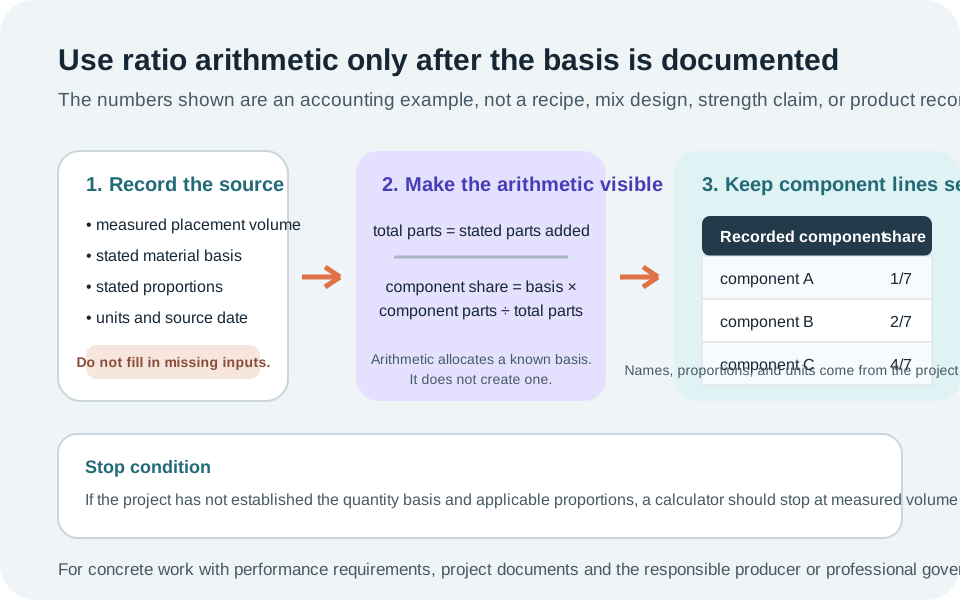
Keep materials on separate rows. The Sand Calculator and Gravel Calculator can assist with separately defined supplier quantities, but they do not establish a cement proportion or make their own density values compatible with another product's package data.
Worked arithmetic example: trace the inputs, not a recipe
The following is a fictional ledger exercise, not a recommended concrete or mortar mixture. Assume a project-specific worksheet has already supplied all of these inputs: a planning material basis of 1.54 cu yd; a stated parts relationship of 1 : 2 : 4; and an exact local bag record that equates one selected bag to 0.11 cu yd for the same worksheet basis. This guide does not select any of those values.
- Total stated parts: 1 + 2 + 4 = 7 parts.
- Cement share: 1.54 × (1 ÷ 7) = 0.22 cu yd.
- Second material share: 1.54 × (2 ÷ 7) = 0.44 cu yd.
- Third material share: 1.54 × (4 ÷ 7) = 0.88 cu yd.
- Raw bag count from the stated bag record: 0.22 ÷ 0.11 = 2.00 bags.
The result is intentionally unremarkable because the useful part is the audit trail: the basis, ratio, and bag-equivalent source all remain visible. If the worksheet instead produced 2.18 bags, the final purchase decision would round to whole packages only after checking the exact package size, local supplier policy, permitted storage, handling constraints, and whether the source inputs apply to the same material state.
Do not reuse these fictional values as a recipe, a strength claim, a bag-yield rule, or a project estimate. A producer, product label, specification, or responsible professional may use entirely different relationships. The NRMCA guidance is included precisely to make that boundary clear.
Round bags after the product record, not before it
Bag rounding is a purchase decision layered on top of raw arithmetic. First retain the calculated cement quantity. Then record the exact selected product, bag mass or stated yield, units, source link or supplier quote, and date. Only then divide by the package equivalent and round up to whole saleable packages if that is appropriate for the confirmed order.
Order bags = whole-package round-up after product and supplier checks
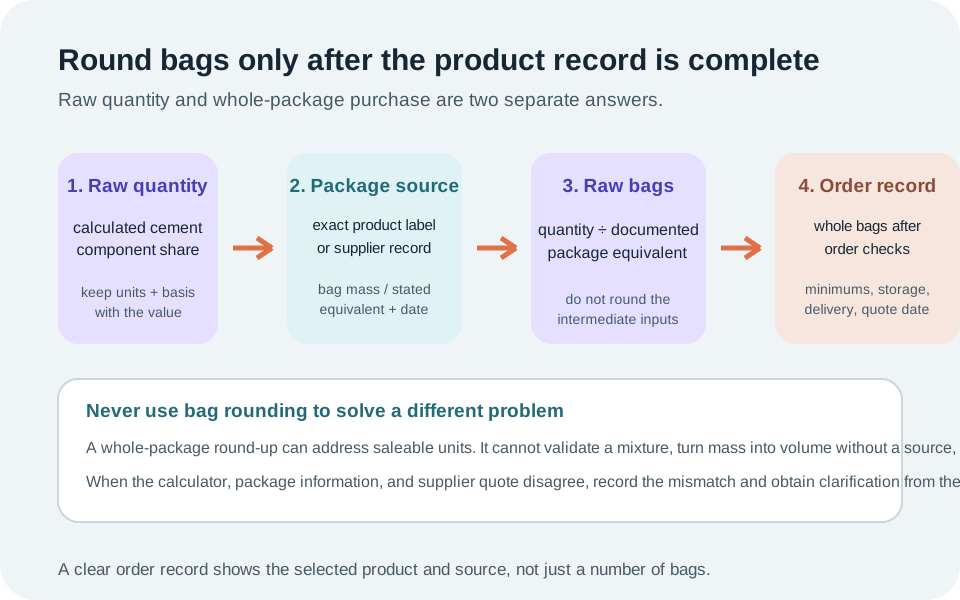
A whole-bag round-up does not authorize an extra water addition, change a stated proportion, choose a mix design, or conceal a mismatch between a volume calculation and a supplier's mass-based quote. If a bag label and a supplier quote use different units, record both unit systems and obtain a conversion from the relevant product or supplier rather than treating mass and volume as interchangeable.
Reconcile planned quantity with actual yield and delivery records
Planning arithmetic is not a promise of delivered or placed yield. The NRMCA's TIP 8 on yield discrepancies describes why material quantity can differ across batching, delivery, placement, and measurement. Its message is useful even when you are only building an estimate: keep the basis, ticket or product information, and actual observed result separate so a difference can be investigated.
| Check | Keep with the ledger | Do not replace it with |
|---|---|---|
| Measured scope | Sketch, dimensions, depth, exclusions, and project revision reference | A remembered total or a generic allowance. |
| Specified material basis | Source, units, conversion if one is supplied, and date | An assumed factor from another job. |
| Product/package facts | Exact name, label or data sheet, bag unit, supplier quote, and date | A generic bag-yield statement. |
| Order and delivery | Whole packages, minimums, batch or ticket information, storage, access, and delivery terms | A calculator result treated as an order confirmation. |
| Actual result | Placed quantity, leftover material, issue note, and responsible review where relevant | A silent change to the original formula. |
For ready-mixed concrete or any project with specified performance requirements, take the producer's current order procedure and project documents as the governing source. This page does not advise how to alter materials, batch a mixture, test concrete, place concrete, or solve an onsite quality issue.
Common material-arithmetic mistakes
- Starting with a familiar ratio. Write the measured quantity and the project-provided basis first; a ratio must never be used to choose the material system.
- Applying a conversion without naming its state. State whether a number refers to placed volume, a dry planning quantity, mass, a bag label, or a supplier sales unit.
- Using one bag value for every product. Record the exact product and the source of its package equivalent or yield.
- Rounding every intermediate line. Keep enough precision during arithmetic; make the whole-package decision as a distinct final step.
- Using quantity math as a strength or safety claim. Material properties, mixing, placement, curing, reinforcement, exposure, and local requirements remain project-specific.
- Hiding a mismatch. When the estimate, product record, supplier quote, and field result disagree, record the discrepancy and seek the relevant responsible guidance.
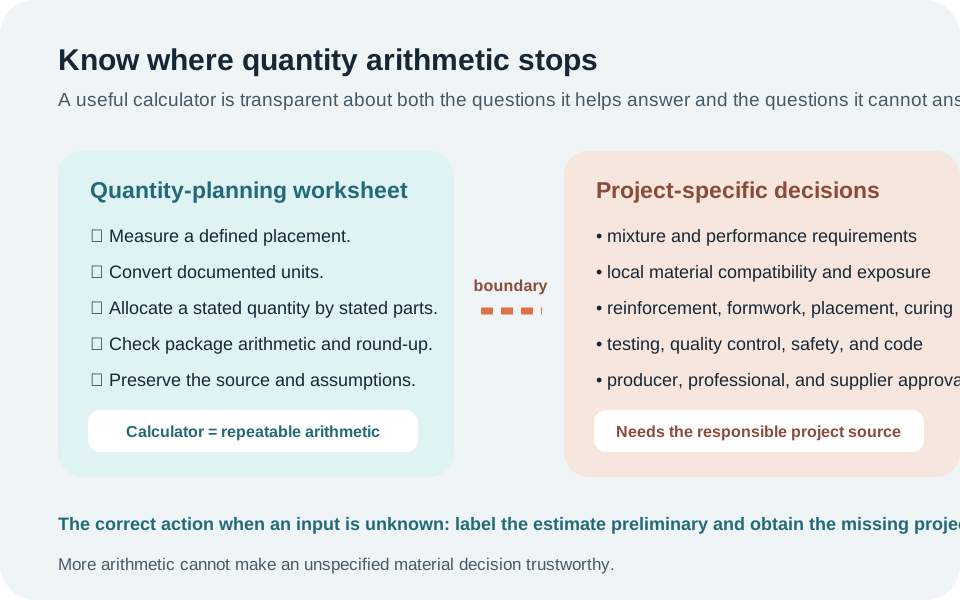
Final audit: can the next person reproduce the order?
Before purchasing, another person should be able to identify the placement drawing, measured volume, material basis, stated proportions, package source, raw quantities, round-up rule, and supplier terms without guessing what a hidden factor represents. If any row is missing, label the estimate preliminary and get the missing project or product information.
The Cement Calculator is a transparent arithmetic assistant once those facts are known. If you find an unclear input, formula, explanation, or source link, use its Report an issue button with the selected mode, units, entered values, result, and the product or project source that should be checked.
Scope and limitations
This guide is educational quantity-planning information only. It does not design concrete or mortar, select a mixture, establish strength or durability, replace specifications or product instructions, determine compatibility, provide structural, safety, health, code, or legal advice, or approve purchasing, mixing, placing, finishing, curing, testing, or delivery. Use current project-specific documents and qualified responsible guidance for the actual work.
Sources and assumptions
These links support the specific material, product, or reference points used in this guide. Local conditions and supplier specifications can still vary.
- National Ready Mixed Concrete Association: CIP 31 - Ordering Ready Mixed Concrete Explains that concrete mixture proportions and ordering details depend on required properties and local material conditions. It supports the guide's boundary between quantity arithmetic and project-specific mix design or producer responsibility.
- National Ready Mixed Concrete Association: TIP 8 - Discrepancy in Yield Explains why delivered or placed concrete quantity can vary from a planning calculation and why yield, handling, and documented records must be reconciled rather than hidden in one assumed conversion.
- NIST Handbook 44 (2026), Appendix C: General Tables of Units of Measurement Supports the base unit relationships used when a documented project quantity is converted between inches, feet, cubic feet, and cubic yards.