
How Many Tons of Gravel Do I Need for a Driveway?
Estimate driveway gravel by measuring compacted volume first, then applying the supplier's stated unit weight and an allowance you can explain.

Suppliers may sell driveway aggregate by the ton while the planned surface is measured in feet and inches. The reliable bridge between those units is a two-pass calculation: first measure the compacted volume; then apply the bulk unit weight for the actual product quoted by the supplier. Our Gravel Calculator keeps those inputs separate so a convenient default never becomes a hidden design decision.
Quantity is not driveway design. This guide does not choose aggregate type, layer thickness, drainage, compaction, edge restraint, or a suitable subgrade treatment. Those choices depend on the site, traffic, climate, local rules, and the responsible designer or contractor.
Use a two-pass order method
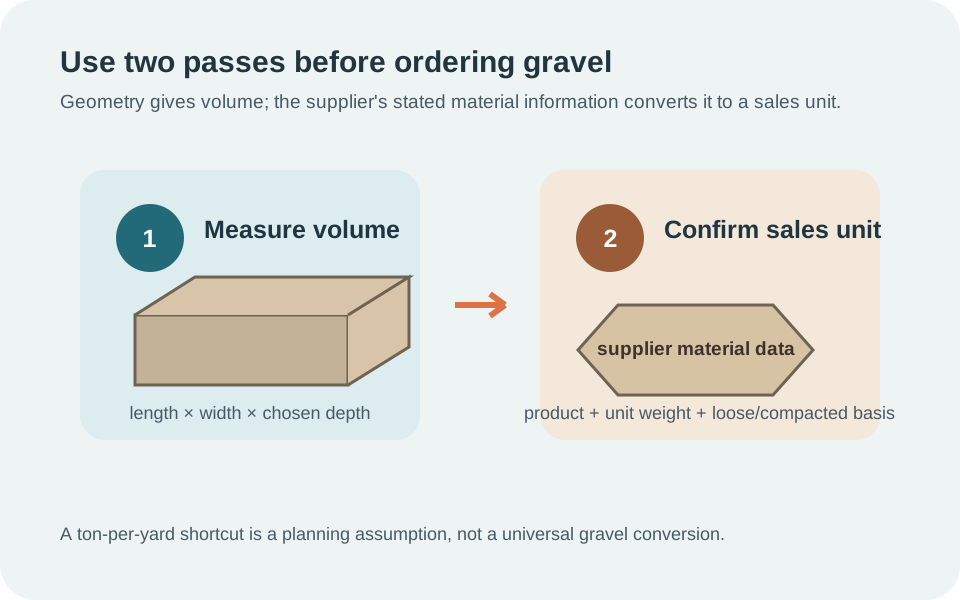
The first pass produces a net volume from dimensions. The second pass turns that volume into the sales unit on the quote. This prevents a common mistake: treating a generic tons-per-yard shortcut as though it were a property of every gravel product.
- Pass 1 — take off volume: record each rectangle, flare, turnout, or different-depth zone using finished length, width, and compacted depth.
- Pass 2 — reconcile the quote: obtain the product name, supplier unit weight, sales unit, and any delivery/minimum-load rules, then calculate the stated quantity.
The driveway gravel formulas
For a rectangular zone with length and width in feet and depth in inches:
When the supplier gives a bulk unit weight in pounds per cubic foot, convert that particular product to short tons:
The geometry and unit conversion are repeatable. The unit weight is an input that can vary with material, gradation, moisture, compaction, and how it is measured. Put the supplier's value beside the calculation rather than presenting a universal density table.
Worked example with stated assumptions
Suppose the finished driveway area is 12 ft wide by 40 ft long at a compacted 4 in depth. Suppose the supplier's product sheet or quote states a planning unit weight of 105 lb/ft³. Those values are examples only.
- Volume: 12 × 40 × (4 ÷ 12) = 160 ft³.
- Cubic yards: 160 ÷ 27 = 5.93 yd³.
- Short tons at the stated weight: (160 × 105) ÷ 2,000 = 8.40 tons.
- If a 10% allowance is a conscious project choice: 8.40 × 1.10 = 9.24 tons.
The final step is not a rule for every driveway. Irregular edges, unverified grades, delivery constraints, or a separately measured extra zone may justify a different approach. The important part is that the final quote can be checked against named inputs.
Separate measured extras from a generic allowance
When a driveway has a widened parking bay, a turnaround, or a known deeper section, calculate that zone separately. A small transparent table makes the result auditable:
| Zone | Measurement basis | Net volume | Reason for adjustment |
|---|---|---|---|
| Main lane | Measured length, width, compacted depth | Calculate separately | Base quantity |
| Widened bay | Its own footprint and depth | Calculate separately | Known additional area |
| Ordering allowance | Stated percent or quantity | Add after net total | Irregular placement or uncertainty |
This approach is more useful than claiming that every project needs the same overage. It also makes it easier to revise one measurement without redoing the entire estimate.
Questions to ask before placing the order
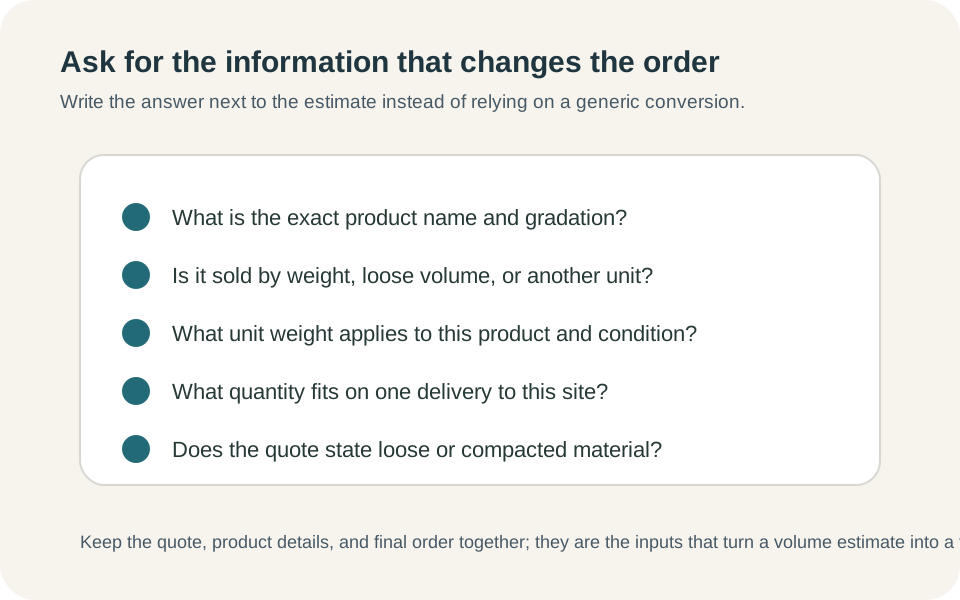
- What is the exact material name and gradation on the quote?
- Is the quantity sold by short ton, metric tonne, cubic yard, or another unit?
- What bulk unit weight should be used for this product and condition?
- Does the quote describe loose material, compacted material, or a delivered weight?
- What delivery vehicle, minimum load, access, and unloading requirements apply?
- Which thickness and layer details have been selected for this site's subgrade, drainage, traffic, and local requirements?
Verification pass: reconcile the tonnage two ways
Before ordering, perform a unit check that starts from the same measured volume. In the worked example, 160 ft³ is 5.93 yd³. At the stated 105 lb/ft³ supplier input, the order calculation is 16,800 lb, or 8.40 short tons. The same result can be checked by first converting the quoted unit weight to a per-yard value: 105 × 27 = 2,835 lb/yd³; then 5.93 × 2,835 ÷ 2,000 = about 8.40 tons.
If those two paths do not agree, stop and check the units. A supplier may quote pounds per cubic foot, pounds per cubic yard, tons per load, or metric tonnes. A correct volume paired with the wrong unit label can still produce a very wrong order.
Decision point: a density mismatch is information, not an inconvenience
If a published planning value, a prior project, and the current supplier quote do not match, use the current product quote for the estimate and ask why the inputs differ. Do not average them. The product may have different gradation, moisture condition, or sales basis. Likewise, a quantity calculation cannot decide whether a layer depth is appropriate for the site. Confirm the selected material and layer design with the responsible project party before converting it to tons.
Make the order auditable
Keep the measured area, selected depth, net cubic feet, density source, conversion, and quoted order unit together in the project notes. If the supplier changes the product or sales unit, rerun the affected line rather than carrying forward an old planning density. That small record makes a later change or delivery question answerable without pretending that one generic gravel number fits every product.
Check delivery against the site plan
Before finalizing a quantity, compare the order with the actual delivery path and placement plan. Record the product name, sales unit, selected depth, expected delivery location, and whether the material will be placed in more than one zone. This does not prescribe a vehicle or access method; it prevents the quantity worksheet from becoming detached from the practical delivery discussion. If access, unloading location, product type, or layer design changes, update the affected measurement and supplier input rather than assuming the old tonnage still applies.
Use the calculator as a repeatable takeoff
The Gravel Calculator can calculate rectangular, circular, and border areas and lets you change density and allowance. Use the Excavation Calculator separately when you also need to estimate removed material. Neither calculator substitutes for a driveway design, a supplier quote, or site-specific safety and drainage decisions.
Sources and assumptions
These links support the specific material, product, or reference points used in this guide. Local conditions and supplier specifications can still vary.
- NIST Handbook 44, Appendix C: General Tables of Units of Measurement Supports the cubic-foot to cubic-yard conversion used in the quantity calculation.
- FHWA Field Materials Manual: Aggregate Unit Weight Supports the limitation that aggregate unit weight is material- and condition-specific rather than one universal number.
- FHWA Granular Base Course Guidance Provides context for the fact that gradation, drainage, subgrade, traffic, and project conditions affect aggregate choices.