
Debt Snowball vs. Debt Avalanche: Which Plan Gets You Out of Debt Faster?
Compare debt snowball and debt avalanche with a transparent payment waterfall, fixed assumptions, and a way to choose an order you can sustain.

Debt snowball and debt avalanche are not different kinds of loans. They are two ways to decide where an extra payment goes after you have covered every required minimum payment. Both methods use the same essential discipline: make each required payment on time, stop adding new balances where possible, and send the available extra amount to one chosen target.
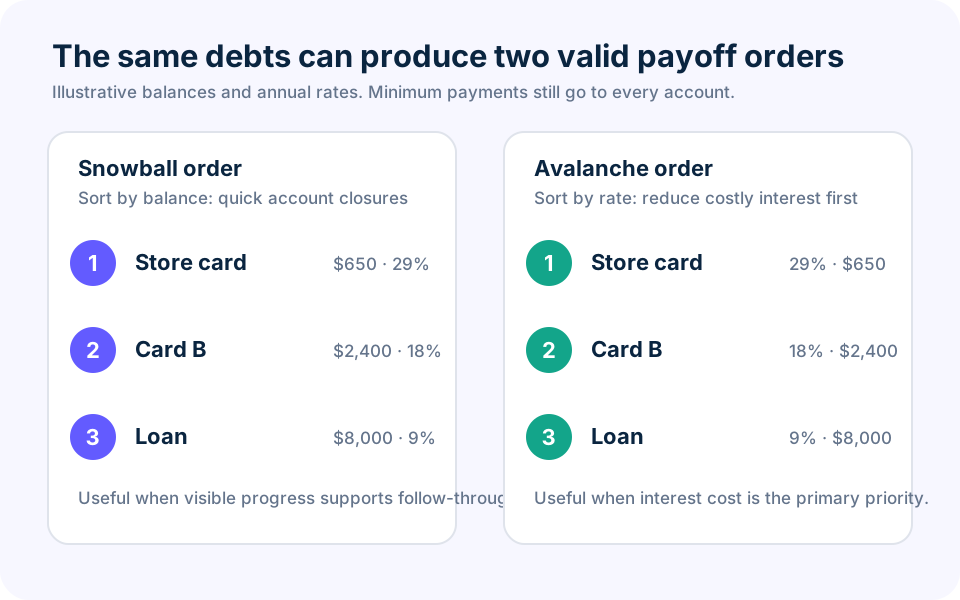
The difference is the target order. A snowball ranks debts by balance, from smallest to largest. An avalanche ranks debts by interest rate, from highest to lowest. This guide explains the payment flow behind each option and matches the assumptions you can test in the Debt Payoff Calculator.
Payoff-plan safety first: This comparison assumes that you can make every required minimum payment. If you cannot, contact the creditor promptly rather than relying on a calculator schedule. A missed payment, a variable rate, a new purchase, or a promotional deadline can change the result.
Start with one payment budget
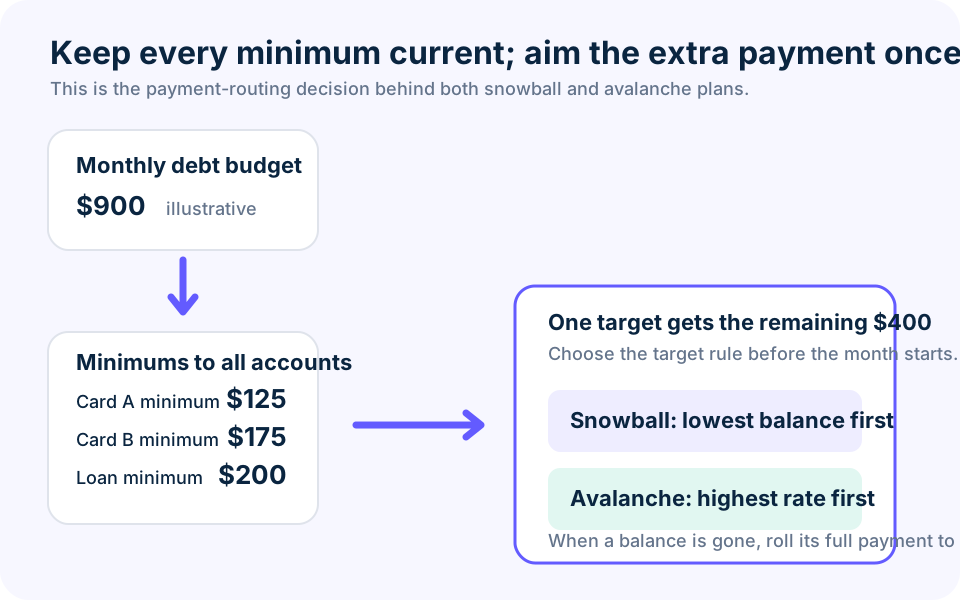
Before choosing a method, create one monthly payoff number:
Keep that total budget fixed in the comparison. When a debt is cleared, do not let its old payment disappear from the plan. Redirect it to the next target. That redirect is the payment waterfall; it is what makes either method accelerate over time.
Debt snowball: smallest balance first
List balances from smallest to largest, regardless of APR. Pay the required minimum on every account. Put all available extra money on the smallest balance. When that balance reaches zero, add its former minimum payment and the same extra amount to the next-smallest balance.
The snowball method can create an early visible milestone when a small account disappears. That can make a plan easier to follow, but it may leave a higher-rate balance accruing interest for longer than the avalanche order would.
- Sort by current balance, not by lender name or payment amount.
- Keep all non-target accounts at their required minimums.
- Send the entire planned extra payment to the smallest balance.
- After payoff, move the old minimum payment into the next target instead of increasing discretionary spending.
Debt avalanche: highest interest rate first
List debts from highest APR to lowest APR. Keep the same minimum-payment and extra-payment rules, but direct the extra amount to the highest-rate balance. With stable rates, no new charges, and the same total payment budget, this order generally minimizes interest cost because it reduces the most expensive balance sooner.
- Sort by the interest rate actually charged to the balance, including any promotional expiration date.
- Pay required minimums on all other debts.
- Direct the planned extra amount to the highest-rate target.
- After payoff, redirect the released payment to the next-highest-rate target.
A transparent three-debt example
Assume these are the balances at the start of a month. The example is only a math illustration; it does not recommend a payment amount or a debt product.
| Debt | Balance | APR | Required minimum |
|---|---|---|---|
| Medical balance | $400 | 0% | $40 |
| Credit card | $1,200 | 24% | $45 |
| Personal loan | $2,800 | 10% | $90 |
The required minimums total $175. The household can add $200, so its total monthly payoff budget is $375.
Month one under the snowball
The smallest balance is the $400 medical balance. It receives its $40 minimum plus the $200 extra, for a $240 payment. The credit card receives its $45 minimum. At a simplified 24% APR divided by 12, its first month’s interest is about $24, so only about $21 of that minimum reduces principal. The personal loan receives its $90 minimum.
Month one under the avalanche
The highest-rate debt is the credit card. It receives its $45 minimum plus the $200 extra, for a $245 payment. Under the same simplified monthly-rate assumption, the first month’s interest is about $24 and about $221 reduces principal. The medical balance and personal loan receive their required minimums.
The example does not prove that one order is emotionally or operationally better for every person. It makes the tradeoff visible: the snowball aims for a quick closed account, while the avalanche directs the extra amount where the current interest charge is highest.
Do not let special balances disappear in the ranking
APR is not the only deadline that matters. A deferred-interest promotion can charge interest based on the original purchase period if the balance is not paid in full by the stated deadline. A balance-transfer offer can end. A loan can have a variable rate. A payment plan can have a required date or fee structure. Put those facts in your worksheet beside balance, APR, and minimum payment before choosing an order.
A practical comparison sheet therefore needs at least these fields:
- Current balance and required minimum payment.
- Current APR and whether it is fixed, variable, promotional, or deferred interest.
- Promotion expiration date and payoff amount required by that date.
- Whether new purchases are still being added to the account.
- Any account-specific consequence of being late or paying less than the required amount.
How to choose a sustainable order
Choose avalanche if your main goal is to reduce interest cost under stable assumptions and you can follow a longer first target. Choose snowball if closing a small account first will make the plan substantially easier to maintain. A hybrid can also be honest: write down the specific first balance you will clear, the date you will switch to highest-rate-first, and why. The value is in using an explicit rule rather than changing targets every month.
Use the Debt Snowball Calculator and Debt Avalanche Calculator with the same balances, APRs, minimums, and extra payment. Compare the results only after checking that both scenarios use the same assumptions.
Scope and limitations
This guide is general educational information, not credit, legal, tax, or personalized financial advice. Calculator results depend on the data entered and may not reflect interest calculation methods, fees, rate changes, new purchases, creditor hardship plans, or promotional terms. If you are unable to make a required payment, contact the creditor or a qualified nonprofit credit counselor promptly.
Sources and assumptions
These links support the specific material, product, or reference points used in this guide. Local conditions and supplier specifications can still vary.
- Consumer.gov — Debt Explained Supports the general steps of making a budget, contacting creditors early if payments are difficult, and considering legitimate credit-counseling help.
- Consumer Financial Protection Bureau — Credit Card Three-Year Payoff Disclosure Explains the important assumptions behind payoff estimates, including no new purchases and the effect of paying more than the minimum.
- Consumer Financial Protection Bureau — What to Do if You Cannot Pay Credit Card Bills Supports the warning to contact a card issuer promptly and to be cautious about debt-relief claims.
- Consumer Financial Protection Bureau — Deferred Interest Promotions Supports the special warning that some deferred-interest balances require a separate payoff deadline and cannot be ranked safely by APR alone.