
How to Calculate Sod for Your Lawn: Area, Cuts, and Supplier Units
Measure the plantable lawn area, add a stated cut allowance, and convert it using the coverage printed by the sod grower or supplier.
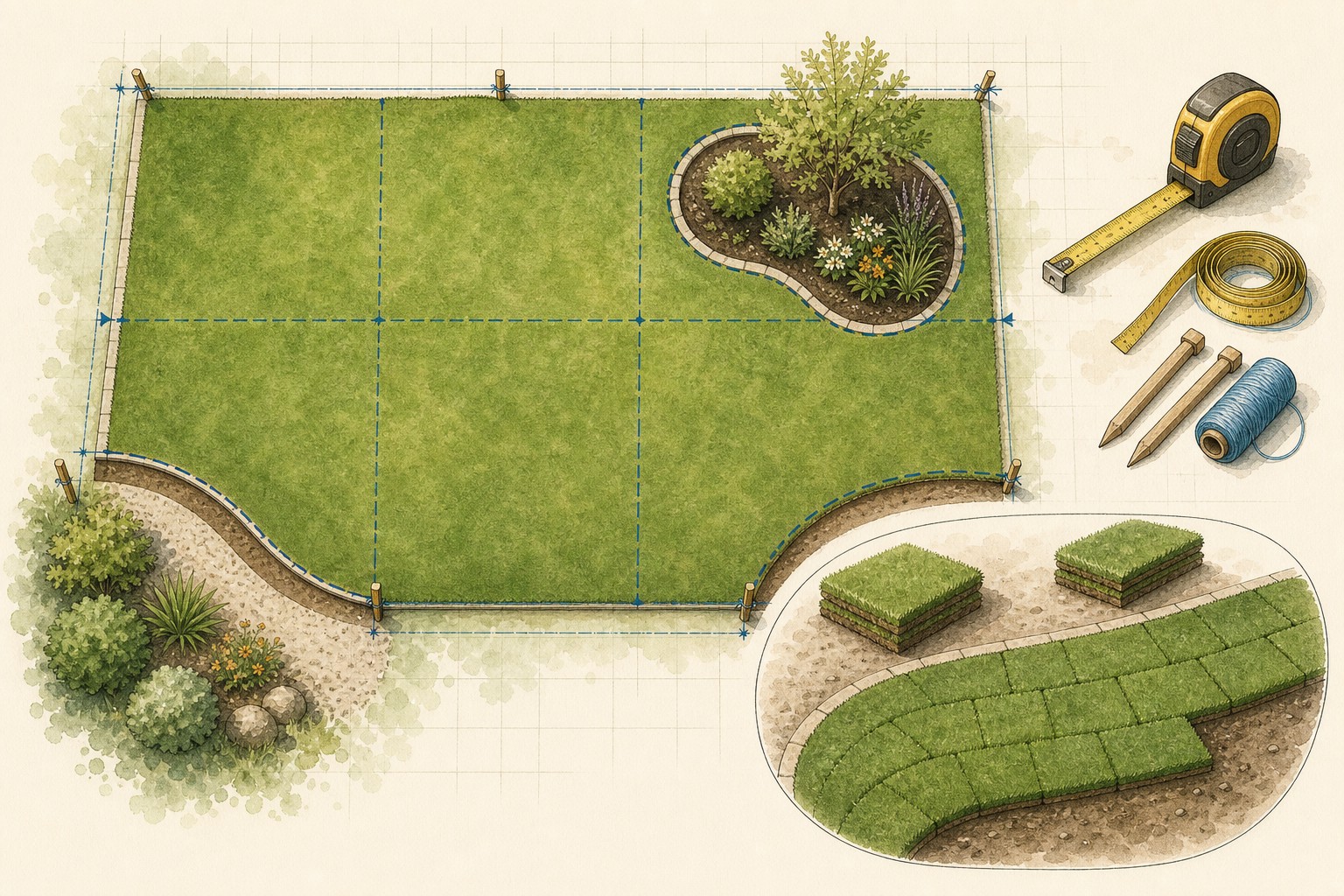
Sod is sold in supplier-defined pieces, rolls, slabs, or pallets, but the site is measured in square feet. A useful estimate starts with the plantable area, not the lot size, then records a cut allowance and the coverage stated by the grower or supplier. The Sod Calculator makes the arithmetic repeatable; the supplier's coverage and local installation guidance still determine the final order.
Do not assume a universal pallet size. Sod dimensions, pieces per pallet, grass species, harvest timing, and delivery practices vary by grower and region. Ask for the product coverage written on the quote before converting square feet to rolls or pallets.
Measure only the area that will receive sod
Sketch the lawn as simple shapes. Use rectangles for broad areas, triangles for tapered sections, and circles or semicircles for curved beds. Exclude patios, driveways, planting beds, sheds, and existing features that will not receive sod. Keep a small ledger so every measurement can be checked later.
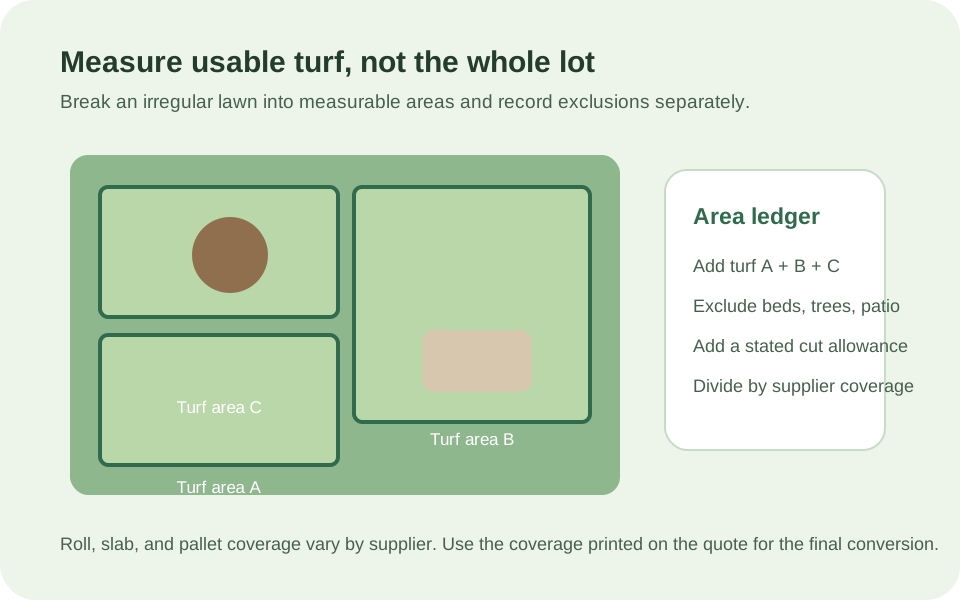
Worked example: a lawn with a planting bed
Assume a rectangular lawn area of 40 ft by 25 ft, with a 6 ft by 10 ft bed that will not receive sod.
- Gross rectangle: 40 × 25 = 1,000 sq ft.
- Exclude the bed: 6 × 10 = 60 sq ft.
- Plantable area: 1,000 − 60 = 940 sq ft.
- If the cut plan warrants a stated 7% allowance: 940 × 1.07 = 1,005.8 sq ft.
The 7% is only an example. A mostly rectangular lawn may need less trimming than a lawn with many trees, tight curves, or inaccessible edges. Plan the cuts before selecting an allowance.
Convert square feet using the supplier's stated coverage
After the area calculation, divide by the coverage on the quote. For example, if a supplier states that one pallet covers 500 sq ft, then 1,005.8 ÷ 500 = 2.012 pallets. The supplier may sell two pallets plus individual pieces, three full pallets, or another combination. Do not round without confirming how that supplier packages and sells the product.
Write the coverage alongside the result: Supplier A, product B, 500 sq ft per pallet as quoted on [date]
. That one line makes the estimate traceable and easy to update if the product changes.
Make the cut allowance visible
A cut allowance is for pieces lost to shape changes, trimming, damage, and small fitting adjustments. It is not a substitute for a poor takeoff. Use a visible comparison rather than a mystery percentage:
| Scenario | Net plantable area | Stated allowance | Planning area |
|---|---|---|---|
| Open rectangle | 940 sq ft | Choose after reviewing cuts | Net area × (1 + allowance) |
| Many curves or islands | 940 sq ft | May need a different documented allowance | Recalculate from the same net area |
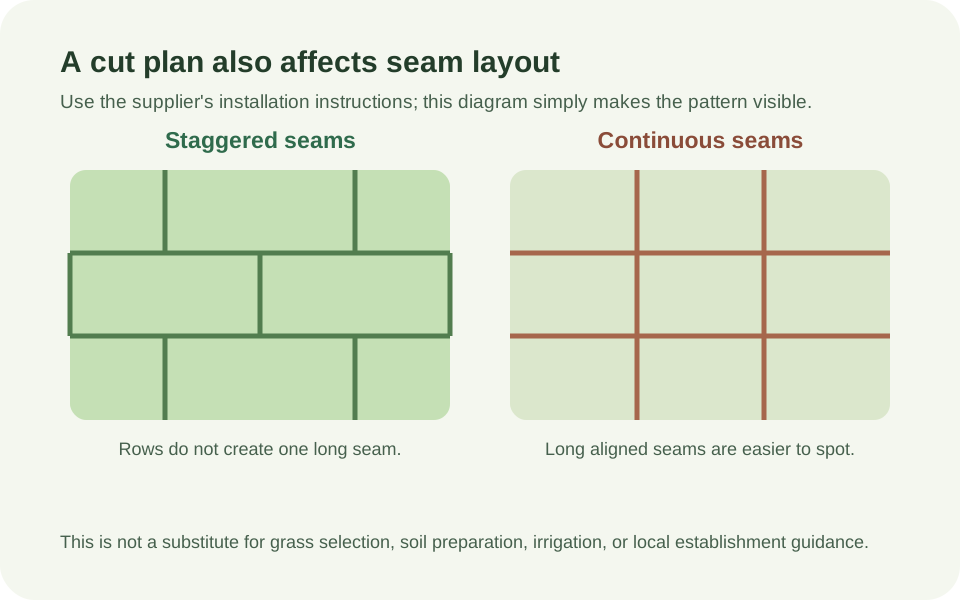
Keep offcuts until the final seams are complete. Penn State and UMN Extension both emphasize fitting adjacent pieces tightly and offsetting seams rather than stretching sod to fill a gap.
Delivery-day checks that matter more than a generic pallet rule
- Confirm the grass species or blend, piece coverage, pallet coverage, delivery window, unloading location, and who is responsible for moving the material.
- Prepare and moisten the soil as advised for the site; do not rely on sod to correct unresolved grading, drainage, or soil problems.
- Plan enough people and tools to lay the material promptly. Extension guidance warns that harvested sod deteriorates rapidly, particularly in warm conditions.
- Lay pieces with seams offset, edges touching, and no stretched gaps. Treat slopes and edge restraint as site-specific installation questions.
- Follow the grower's care instructions and local water restrictions. Watering, fertilizer, herbicide, and traffic advice varies with turf type, weather, and local rules.
Verification pass: check the cut plan against the supplier unit
Use the plantable-area total to test the final packaging decision. In the example, the planning area is 1,005.8 sq ft after the stated allowance. If a particular supplier quotes 500 sq ft per pallet, the arithmetic is 1,005.8 ÷ 500 = 2.012 pallets. If another supplier quotes 450 sq ft per pallet, the same planning area is 1,005.8 ÷ 450 = 2.235 pallets. Neither result tells you what to buy until you know whether individual pieces are available and whether the quoted coverage is for the exact product.
Verify the total by adding the individual shapes a second time, then compare the sketch to the cut plan. A missed island, curb strip, or bed can change the result more than changing the allowance by a point or two.
Decision point: quantity is secondary to product and timing
Choose the turf product and delivery date before treating the estimate as final. Species, climate, shade, traffic, soil preparation, harvest freshness, delivery access, water availability, and local restrictions all affect whether a sod order is appropriate. If the grower cannot confirm coverage, harvest/delivery timing, or care instructions, the correct response is to pause the order rather than invent a standard pallet rule.
Keep an installation record
On delivery day, keep the supplier's product description, stated coverage, delivery time, and care instructions with the measurement sketch. This is useful if the delivered unit differs from the quote or if a later question depends on what was installed. It also prevents a generic online pallet estimate from silently replacing the supplier information for the turf actually ordered.
Use the sketch to control cut waste
Keep the measurement sketch with the order and mark full runs, narrow strips, curves, and obstacles. It helps distinguish a deliberate allowance for cuts from an accidental double count of the same area. When the product arrives, use the sketch to place larger pieces in the longest uninterrupted runs and reserve smaller cuts for edges where the layout calls for them. The sketch does not replace the grower's instructions, but it makes the quantity estimate a practical installation record instead of a number copied from a coverage chart.
What this calculator does and does not decide
The Sod Calculator can calculate common areas and convert them into a supplier unit once you enter its coverage. Pair it with the Square Footage Calculator for irregular shapes or the Topsoil Calculator when an approved soil-preparation plan includes added material. It does not select turf species, fertilizer, irrigation, or landscape design for a particular climate or property.
Sources and assumptions
These links support the specific material, product, or reference points used in this guide. Local conditions and supplier specifications can still vary.
- Penn State Extension: Lawn Establishment Supports site preparation, prompt installation, staggered seams, watering, and the limitation that turf establishment depends on conditions.
- University of Minnesota Extension: Seeding and Sodding Home Lawns Supports using fresh sod promptly, offsetting seams, site preparation, and checking grower-specific sod information.